Let’s be honest: the 2026 MLB season doesn’t feel like the baseball our fathers grew up watching. It’s faster, it’s louder, and honestly, it’s a bit more brutal on the players. We’ve officially left the era of “waiting for something to happen” and entered an age where every millisecond on the scoreboard is a life-or-death decision for the pitcher.
The “human element” used to be an excuse for missed calls and four-hour games. Now, in 2026, we have a digital umpire that doesn’t blink and a clock that doesn’t show mercy. The integration of Pitch Clock 2.0 and the Automated Ball-Strike (ABS) Challenge System has turned the diamond into a high-stakes lab where offensive strategy is being rewritten in real-time.

Pitch Clock 2.0: Oxygen is the New Velocity
If you’ve watched any high-leverage late-inning games this season, you’ve seen it: elite relievers gasping for air. Pitch Clock 2.0 isn’t just a timer; it’s a physical gauntlet. Shaving the clock down to 15 seconds with nobody on and a tight 18 seconds with runners on has changed the very nature of pitching.
The Collapse of the Max-Effort Reliever
Remember the days when a closer could take a stroll around the mound, adjust their cap, and reset after every 100-mph heater? Those days are gone. Now, if you’re throwing 100 mph, you have to do it every 18 seconds. Our deep dive into [MLB Stats] shows that velocity is dropping significantly after just 12 pitches for most bullpen arms. They simply cannot recover fast enough.
Hitters are smelling blood. The current “offensive meta” is to foul off pitches early in the count. Not to get a hit, but to make the pitcher throw five pitches in 90 seconds. By pitch six, that “unhittable” fastball is now 96 mph and sitting right in the middle of the plate. It’s cardiovascular warfare.
Mind Games at the 8-Second Mark
There’s a new psychological game being played in the batter’s box. The rule says a hitter must be “alert” to the pitcher by the 8-second mark. Elite hitters like Shohei Ohtani are timing their entry into the box to the exact millisecond. They wait until the clock hits 9, then step in, giving the pitcher zero time to look at the pitch-com or shake off a sign. It’s forcing pitchers to rush their mechanics, leading to a massive spike in “rushed-release” errors.
The ABS Challenge System: A Geometric War
We aren’t in the “Robo-Ump” era entirely, but the ABS Challenge System is arguably more exciting. Each team gets two challenges. You tap your helmet, the big screen shows a 3D replay, and the call is overturned in ten seconds. It’s fast, it’s fair, and it’s killing the art of “framing.”
Why Catchers are Changing Their Identity
Go back and look at our [Player Profiles] from 2023. Framing—the ability to pull a ball into the strike zone—was a million-dollar skill. In 2026, it’s a waste of energy. The ABS system tracks the ball in a 3D plane. If any part of that ball grazes the “holographic” zone, it’s a strike. Catchers are now being scouted for their “pop-time” and their ability to block the dirt, because they can no longer fool the computer.
The "Full Count" Strategy
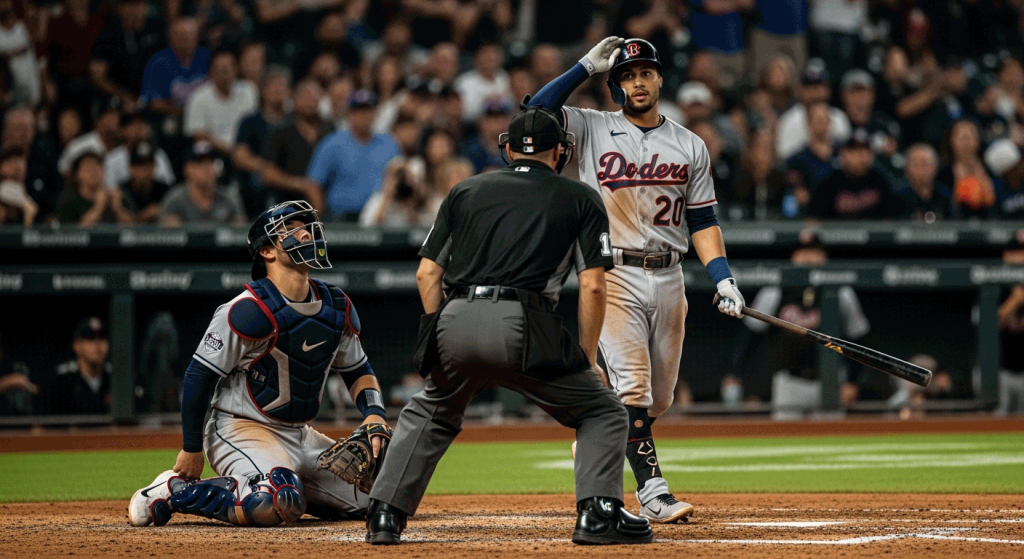
The most intense moments in 2026 happen on 3-2 counts. Hitters with elite vision are now using their challenges as a tactical weapon. If a pitch is an inch off the black, they don’t walk back to the dugout; they tap their helmet. This “Strike Zone Transparency” has shifted the leverage. Pitchers can’t “expand the zone” on a whim anymore. They have to come into the zone and fight, or they risk giving up a walk.
The "Small Ball" Counter-Strike
You’d think a high-tech game would be all about home runs, but 2026 has brought back the bunt and the stolen base. Why? Because pitchers are so worried about the clock that they’ve stopped paying attention to the runners.
- The Stolen Base Explosion: With limited step-offs and a ticking clock, base stealing is the easiest it’s been since the 80s. Runners are timing the pitcher’s “set” position perfectly.
Chaos on the Bases: Check out our [Tournaments & Leagues] updates; the teams leading the standings aren’t the ones hitting 300 homers—they’re the ones causing chaos on the paths. A pitcher in 2026 is a stressed pitcher, and a stressed pitcher makes mistakes.
Pitching Labs: The Search for the "Anti-ABS" Breaking Ball
Pitchers aren’t just sitting ducks. They are using 2026 technology to fight back. “Pitching Labs” are now designing balls with “extreme vertical drop.” The goal? To have a pitch that looks like a ball to the human eye—heading for the dirt—but technically “clips” the bottom of the ABS zone by a fraction of a millimeter.
If the ball touches the zone, the challenge confirms it’s a strike. This “geometric pitching” is the new frontier. It’s less about “stuff” and more about “geometry.” Pitchers are now throwing sweepers that look like they’ll hit the batter but end up grazing the back corner of the plate. It’s frustrating for hitters, but it’s the only way pitchers can survive the ABS era.
Defensive Realignment: The Outfield Shift
Defense has had to evolve too. Because contact rates are up (thanks to fatigued pitchers), balls are being put in play more than ever. The old “static” defense is dead. Infielders have to be lightning-fast because the “exit velocity” on tired pitches is through the roof.
Outfielders are playing deeper than ever to prevent the “gap shots” that are becoming the hallmark of the 2026 season. Teams are no longer looking for “plodding” power hitters; they want athletes who can play three positions and sprint for nine innings.
Final Verdict: A New Brand of Baseball
Is the 2026 version of MLB better? If you like speed, strategy, and fairness, then yes. The “Plate Revolution” has taken the guesswork out of the game and replaced it with elite athleticism. The game moves at the speed of modern life now.
As we look toward the 2026 World Series, the winner won’t just be the team with the most talent—it will be the team that manages their “oxygen” better and uses their “helmet taps” more wisely. The diamond has been digitized, and there’s no going back.
Frequently Asked Questions (FAQs)
Yes, MLB implemented the system league-wide starting on Opening Day 2026 after
Each team starts with two challenges. If you win the challenge (the call is overturned), you keep your challenge. If the call stands, you lose it.
If a game goes to the 10th inning and a team is out of challenges, they are granted one "bonus" challenge for the remainder of the game.
Yes, it has been tightened to 15 seconds with bases empty and 18 seconds with runners on, forcing a much faster pace than the 2023 version.
No. Home plate umpires still stand behind the catcher and make the initial calls. The ABS system is only used when a player initiates a challenge.