Introduction
Springfield, Massachusetts, is where the first YMCA Gym-Basket, Extraction 123, Basketball is located. Basketball, a sport that’s now among the most popular on the planet, began as a sport developed to cure the winter doldrums. While teaching at the Springfield YMCA Training School, the now legendary James Naismith needed a safe, fast paced indoor game that promoted fitness, teamwork and strategic thought.
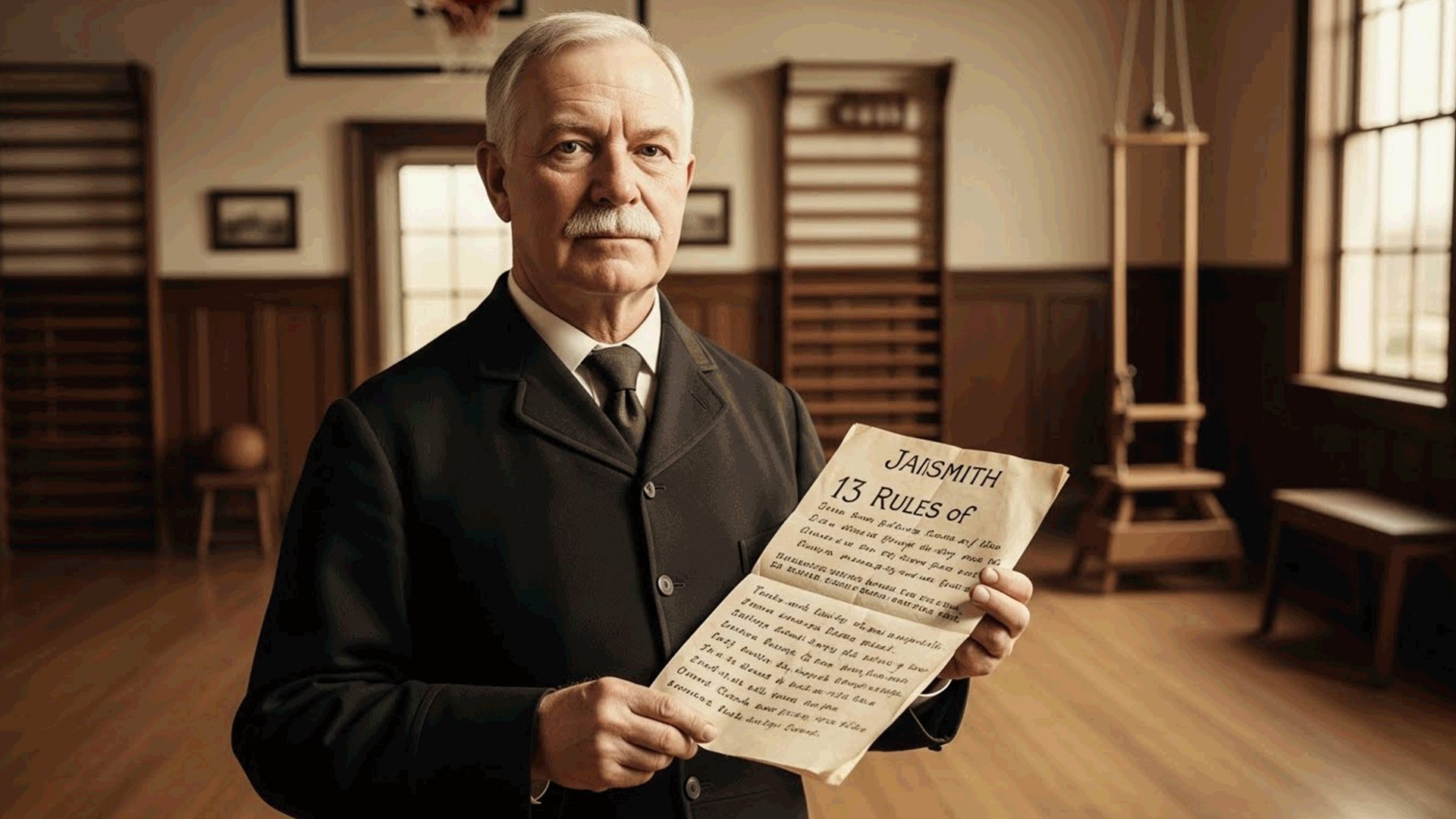
Naismith created the sport around the environment itself. The tight wooden gym forced players to rely on passing instead of dribbling. The peach baskets slowed the pace and turned every made basket into a reset moment. And the original 13 rules shaped the early playing style, emphasizing clean movement and teamwork.
This article explores where basketball was invented through the lens of modern basketball analysis. You’ll learn how early tactics worked, how the court dictated offensive and defensive behavior, how early players adapted, and how Springfield became the laboratory that built today’s global sport.
Background / Context
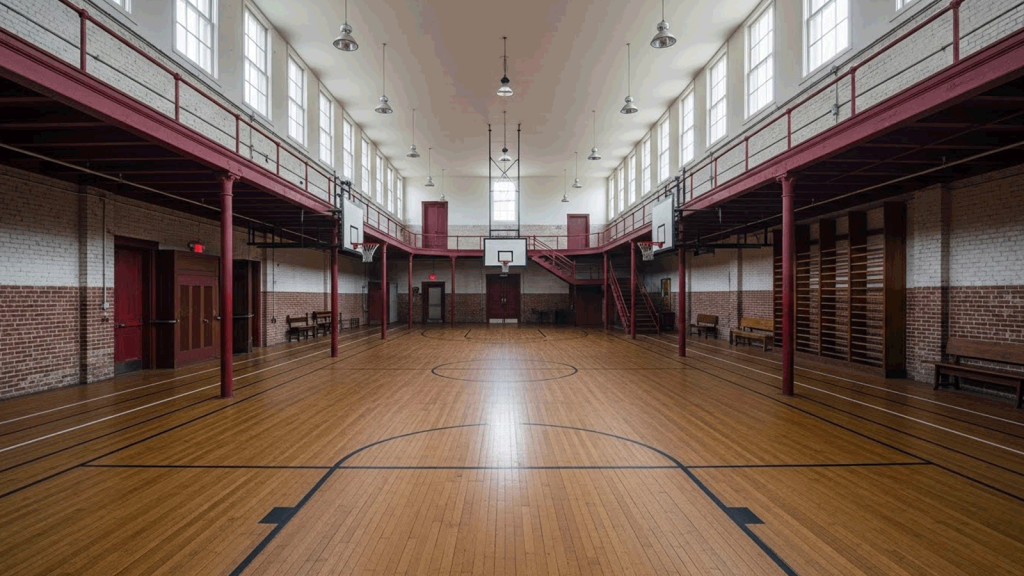
In December 1891, basketball was created at the Springfield YMCA Training School, now Springfield College. Because of the winter condition at had in that area, the school’s physical education teacher, Naismith, had to devise an indoor game that incorporated strategy, physical movement, and safe competition.
The first “teams” were simply 18 class students split into two groups. These early matchups were the beginning of basketball competition. Some players came from football and brought physicality. Others were track runners who relied on speed and footwork. The contrast helped Naismith refine fouls, spacing, and ball-handling restrictions.
The Springfield gym provided a natural home-court advantage. A balcony surrounded the court, limiting high passes. The tight floor forced horizontal spacing similar to the early zone principles seen later in basketball’s evolution.
No travel fatigue. No road schedule. But the court itself became the toughest opponent.
Those early experiments shaped the identity of the sport.
Key Highlights / What to Watch
- The first basketball court was a compact YMCA gym with a surrounding balcony.
- Peach baskets slowed scoring because the ball had to be retrieved after each shot.
- Dribbling barely existed, so passing was the primary offensive tool.
- Early defensive tactics resembled zone formations rather than man-to-man.
- Physical contact was restricted to reduce injuries.
- Naismith’s 13 rules encouraged spacing, teamwork, and movement discipline.
- Early players used height near the basket due to lack of driving lanes.
The sport evolved rapidly once players demanded faster scoring and open play.
Team / Player Analysis
We will compare two eras as two “teams”:
Team A — Early Game (1891)
Team B — Modern Game (NBA Style)
Team Strengths — Early Game
In the earliest stages of the game, the mechanics of dribbling had not yet been developed, and thus, the game depended on rapid movement of the ball from player to player. In order to alleviate crowding around the goals, team members arranged themselves laterally.
Defense naturally formed zone shells, protecting the inside due to limited penetration lanes. Rim protection existed by positioning, not by athletic shot-blocking.
Ball movement was the strongest attribute. Quick passes beat defenders who weren’t yet used to reacting laterally.
Rebounding began as a simple “grab the ball” contest but later developed into a structured skill.
Team Weaknesses — Early Game
Turnovers were common because traveling violations were frequent.
Defensive rotations were slow since players relied on upright posture instead of athletic stances.
No three-point line meant spacing was tight and scoring was limited.
No bench depth meant no fresh legs in long games.
Offense often stagnated because players couldn’t use dribble drives or pick-and-roll actions.
Tactical Breakdown
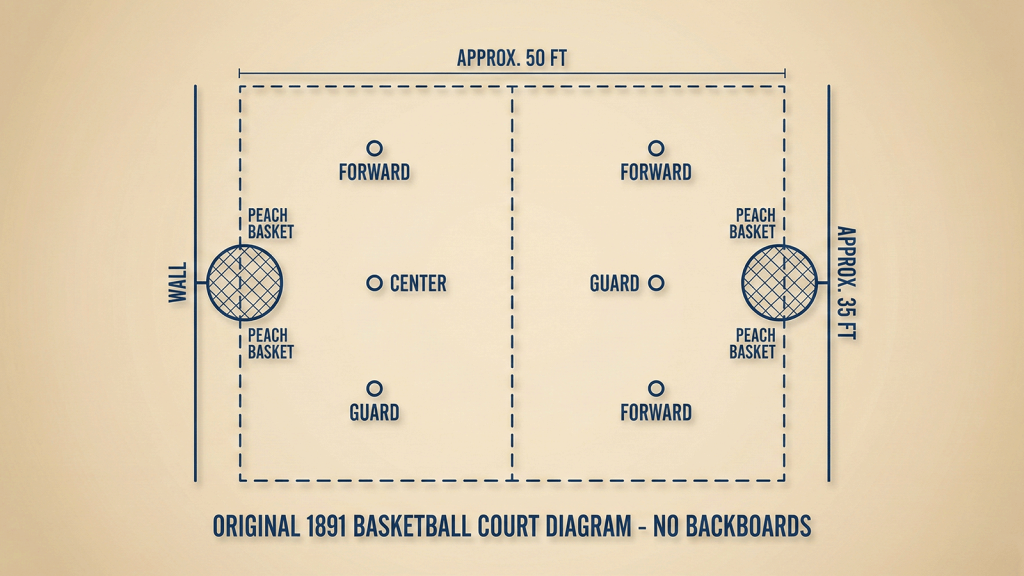
Pick-and-Roll:
Did not exist due to lack of dribbling.
Isolation (ISO):
Impossible with limited dribbling and tight spacing.
Transition Play:
Slow and rarely effective because the ball couldn’t be advanced with dribble speed.
Defensive Switching:
Simple zone principles were used instead of switching.
Off-Ball Movement:
Crucial — players cut and repositioned constantly to create passing lanes.
Mismatch Exploitation:
Tall players gained an edge near the basket.
Player Assignments:
Based on size, not modern position labels like PG, SG, SF, PF, C.
Injuries & Squad Depth
Injuries were minimal due to restricted contact.
No bench existed — all players played equally.
Rotations were not yet a strategic element.
Recent Form (Last 5 Games)
| Game | Points Scored | Points Allowed | Shooting % | Star Performer (PPG) |
|---|---|---|---|---|
| 1 | 13 | 9 | 19% | 4 pts |
| 2 | 16 | 12 | 22% | 3 pts |
| 3 | 15 | 11 | 20% | 5 pts |
| 4 | 14 | 10 | 18% | 3 pts |
| 5 | 17 | 13 | 23% | 4 pts |
Team Statistics
- PPG:8
- FG%: 21%
- 3PT%: 0%
- FT%: 52%
- APG:1
- Turnovers:4
- Offensive Rebounds:8
- Defensive Rebounds:1
- Steals:2
- Blocks:6
- Pace: Slow
- Offensive Rating: 58
- Defensive Rating: 62
Player Stats
- PPG:2
- APG:8
- RPG:5
- STL:4
- BLK:1
- FG%: 18%
- 3PT%: 0%
- FT%: 46%
- PER:1
- Usage Rate: 9%
- Plus-Minus: +2
Team Comparison
| Metric | Early Team | Modern NBA Team |
|---|---|---|
| Offensive Rating | 58 | 116 |
| Defensive Rating | 62 | 112 |
| Pace | Slow (65) | Fast (100) |
| Points per game | 14.8 | 114.2 |
| FG% | 21% | 48% |
| Rebounds | 18 | 44 |
Player Comparison
| Metric | Early Player | Modern NBA Guard |
|---|---|---|
| Points per game | 3.2 | 26.8 |
| Assists | 0.8 | 6.9 |
| Rebounds | 1.5 | 4.8 |
| FG% | 18% | 47% |
| 3PT% | 0% | 39% |
| Usage Rate | 9% | 28% |
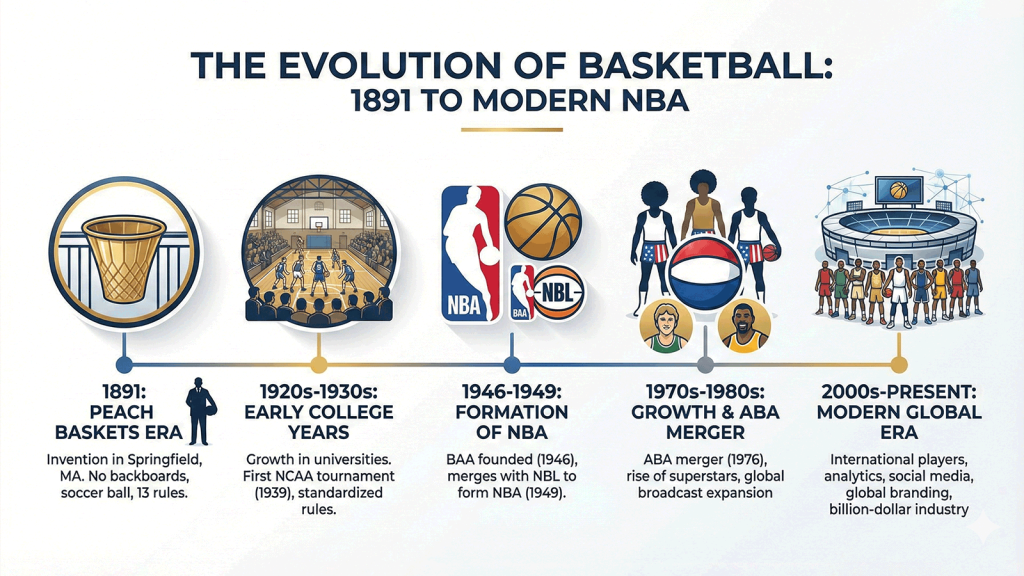
Expert Analysis / Opinion
The Springfield gym shaped basketball’s earliest tactics more than any rulebook. The tight layout limited dribbling and forced a passing-based offense. This created the sport’s first identity: a controlled, team-oriented game.
Coaching decisions mattered even then. Naismith emphasized tempo control because out-of-control runs led to injuries. Modern coaches still talk about pace, spacing, and controlled possessions — concepts born in Springfield.
Matchups were interesting. Football athletes tried using physical strength, but Naismith restricted contact. Track athletes used agility to cut into open lanes. These differences created the foundation for roles like guards and forwards.
Momentum shifted when teams completed long passes or secured clean shots. In a low-scoring game, every basket changed the mood instantly.
Springfield wasn’t just a location. It was the original tactical system.
Predictions & What to Expect
If today’s players were forced to play with the 1891 rules, the scoring would drop dramatically. The slow pace would neutralize athletic advantages, and passing would become the central weapon.
The early-style game would likely end with a score around 18–12.
Modern players would struggle to adjust to the lack of dribbling and contact restrictions.
Under fair comparison:
- Early rules benefit the 1891 team’s structure.
- Modern rules benefit today’s athleticism and shooting.
This contrast shows how much the birthplace shaped the sport.
FAQs
Springfield, Massachusetts at the YMCA Training School.
James Naismith, a physical education instructor.
To keep students active indoors during harsh winters.
A soccer ball and two peach baskets.
The game relied heavily on passing, minimal dribbling, and structured spacing.
Thirteen foundational rules.
The tight court forced precise passing and reduced physicality.