

Introduction
At first glance, one might believe there are more than one billion fans of cricket, and given the sport’s deep cultural roots, it should be part of the Olympics. There should be as much emphasis on Olympic cricket as there is on the grandiose stadiums and basketball courts. To everything, there should be some rationality. There is no doubt about the absolute exclusion of cricket from the Games for the over past century. Why haven’t the Olympians acknowledged its existence?
Cricket has an old connection with Olympic Games. Unlike the rest of the world that was embroiled in imperialist stratagems the cricketing fraternity of Britain was participating in cricket Olympic tournaments, and it was the uno Denaro of cricketing England which was nagging for the inclusion of the game in the Olympic world, which was in its painful and embryotic stage and felt ashamed of having only two teams.
Against this background, what are the possible reasons for exclusion of cricket from the Olympics? What barriers has it had to face? What is the forecast for cricket, and for its Olympic re-incarnation?
A Traceable Timeline: The Olympic Games and The Game of Cricket
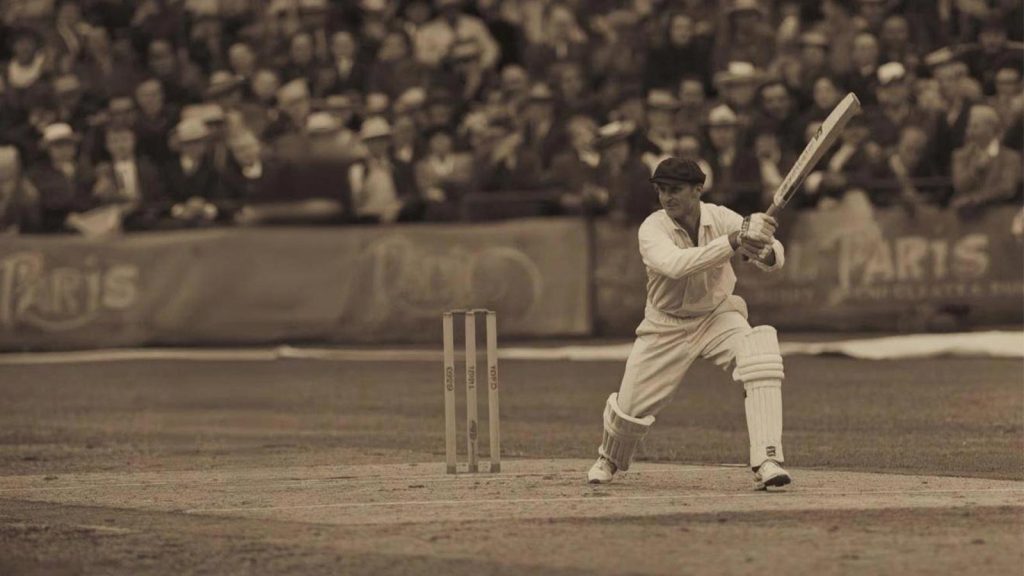
The debut of Cricket in the Olympics started in April 1900 in Paris. The representatives British Empire cruised past the French side in a match which added greater dimension to the sport. The event covered 2 days but had very little spectators and absolutely no media coverage.
For a very long time, no one knew about the association between Cricket and the Olympics.
Following the event, no other association took place with the Olympics with abandonment and no chance of a demonstration. Noted as the primary factor, the amount of time and place the sport takes up, coupled with the limited number of countries which play the sport, posed to be a great issue.
The structure itself is a reason as to why the sport has never been associated with the Olympics. For the past 120 years, the associated stance for the sport has been argued as fast paced with great multi-dimensional, unlike the sport itself.
The Duration Dilemma: Cricket Takes Time
Perhaps the most significant reason cricket hasn’t made the Olympic cut lies in its time-consuming nature.
Traditional Formats
Regular Test matches go for five days without a break which can be exhausting. Even One-Day Internationals take about eight hours to finish. Now look at Olympic events. They are designed to be completed in a few hours or even just a few minutes.
The Increasing Popularity of T20 Format
The revamp of the sport of cricket with T20 matches lasting just about three hours with the introduction of T20 cricket in the 2000s was nothing short of a competition. The new format made the game more fast-paced, action packed, and more user friendly for new fans. With cricket now being easily adaptable for the Olympics, its T20 format is quick and exciting, ensuring seamless integration in terms of broadcasting.
Unfortunately, T20 cricket was too late to the party. By the time T20 cricket was a global phenomenon, the scheduling, and broadcasting policies of the Olympics were already set in stone with other sports.
Global Reach: A Sport Popular, But Not Everywhere
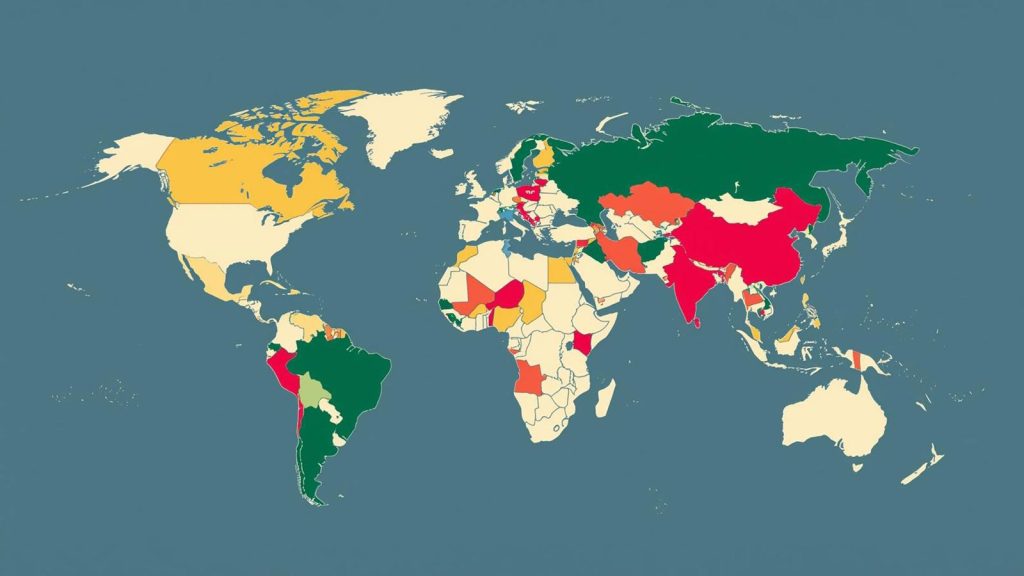
Countries such as India, Pakistan, England, Australia, New Zealand, and South Africa show immense popularity for cricket, but its reach is still nonexistent in other regions.
Cricket is in the international Olympic committee’s (IOC) portfolio, but the IOC also embraces sports with a more extensive demographic and international coverage. Traditionally, the game of cricket has been geographically associated with the Commonwealth, leaving blank spaces in the United States, certain portions in Europe, and the majority of East Asia.
The Global Imbalance
To illustrate:
- The essence of Cricket is largely associated with Southern Asia – more than 90% of its fans come from there.
- Numerous territories do not have a organized infrastructure for domestic cricket.
- A scant few countries possess genuine competitive cricket teams.
This disparity makes it nearly impossible for the sport to meet the International Olympic Committee’s definition of “global”.
However, efforts such as USA Cricket, the European Cricket League, and the growth of franchise leagues around the globe are gradually transforming that situation – providing the sport with wider appeal than it has been able to attain in the past.
Financial and Broadcasting Challenges
Money has always money has always been there for the exclusion of cricket in the Olympics.
For years, the governing organizations along with the broadcasters have held on to the ICC Cricket World Cup, T20 World Cup, and the Indian Premier League (IPL) as marquee properties, turning a blind eye to the potential of the sport, as these properties have always provided huge audiences and revenue.
Having cricket as part of the Olympics would mean potential scheduling, broadcast, and revenue issues, collisions for such profits and revenue overlaps. Take for example, the IPL, the season IPL alone is worth billions. It also constitutes a part of prime calendar real estate. The National boards of such countries would do anything to ensure that such a cycle is not disrupted.
In addition, also, even with the shortest cricket matches, the availability of large venues, daylight hours, and games during the intervals of rest poses a logistical problem to fit in the Olympics calendar of fortnight.
So, it is not just have been about “can cricket fit in?”, also about “can cricket fit in and does it make business sense?”
Venue and Logistical Limitations
The infrastructure for cricket is yet another hurdle to overcome.
Olympics cities which are not renowned for cricket and are hosting the games for the first time do not possess international standard cricket pitches. And constructing a makeshift pitch or a stadium for a couple of matches is not economical, particularly in those nations which have no cricketing culture.
Real-World Examples
For example:
- Japan, Brazil, and France — recent or upcoming Olympic hosts — have few facilities suitable for professional cricket.
- Setting up turf pitches requires specific soil and climate conditions.
- Umpiring, ground maintenance, and equipment logistics add extra layers of complexity.
These challenges have historically discouraged Olympic organizers from including cricket — until the emergence of adaptable formats like T20.
The Shift: Growing Momentum for Olympic Inclusion
The last decade has been a blended experience for many.
The success of T20 leagues such as IPL, The Hundred, and Big Bash League validates the global appeal of the game beyond geography, and culture, and even to the most casual of sports fans.
It is no longer a hollow compliment when one describes the T20 format as a Post-Modern Cricket with the ability to fit seamlessly with the rhythms of contemporary broadcasting. The International Cricket Council (ICC) has, not without hesitance, aggressively pursued inclusion of cricket in the Olympics. The argument is, to say the least, formidable:
- The Olympics stands to gain billions of new fans.
- The T20 format is tailor-made to broadcast.
- Women’s and men’s competitions of all tiers can be played simultaneously with a lot of ease.
This is not to say that cricket is not without its sacrifices.
The Comeback: Cricket’s Return at Los Angeles 2028
There has been a lot of talk and speculation but now, after years of absence, cricket has been confirmed as a new sport for the 2028 Los Angeles Olympics.
The Olympics will include both men’s and women’s T20 matches which is revolutionary for sports and women’s equity.
This decision is expected to:
- Provide opportunities for associate nations such as the USA, UAE, Ireland, and Nepal.
- Strengthen cricket’s long-term case for becoming a permanent Olympic sport.
- Dramatically expand the Olympic viewership (particularly across South Asia).
For the first time, cricket will be positioned to award players an Olympic medal, which can be proudly worn alongside the national medal, as the sport will through new sponsorship deals, gain access to athletics and swimming on the world stage.To put it another way, has been a lot of chat and speculation but now, after years of absence, cricket has been confirmed as a New sport for the 2028 Los Angeles Olympics.
Assumptions for the Future of Cricket in Olympics
Assumptions for the Future of Cricket in Olympics
Though the return is historic, the road ahead won’t be smooth.
For now, the challenges include:
- Team Scheduling: Scheduling ICC events with no collisions to the Olympics is complex.
- Team Restrictions: The potential cap of 6–8 teams for the Olympics on each gender can affect some major countries.
- Venue Conditions: Managing pitch reliability in various countries for future Olympics.
- Cricketer’s Commitments: Managing time for overseas games, franchise tournaments, and Olympics rehearsals.
Managing these effectively would mean a steadfast integration of cricket to the Olympic framework.
The Need for Cricket, And Olympics for Cricket
The alliance is a win-win for both cricket as well as the Olympics.
For the Olympics
- It adds a whole new demographic audience from Asia, the fastest expanding sports market.
- It broadens the Games’ sponsorship opportunities and reinforces the appeal in untapped regions.
- It is in line with the ethos of the IOC, advocating for globalization for sports.
For Cricket
- Olympic recognition adds legitimacy beyond traditional cricketing nations.
- It introduces the sport to millions of new fans, especially in non-Commonwealth regions.
- It offers female cricketers an equal stage to shine globally.
In essence, it’s a partnership that enhances both legacies — the Olympics gain billions of new eyes, and cricket gains an even broader horizon.
The Future of Cricket in the Olympics
Let me rephrase that, outlook of Cricket in the Olympics would depend on the triumph of the game during the 2028 seasons.
Related Read: Will Cricket Be in the 2028 Olympics?
T20 cricket’s continued inclusion in the Olympics will depend on its ability to draw a global audience, ensure competitive balance, and promote active participation across the world.
Future Possibilities
- Addition of T10 or co-ed exhibition matches.
- Growing the associate member base with qualification tournaments.
- Creating flexible formats for indoor or hybrid cricket.
One thing is certain, the chapter of cricket’s Olympic journey has just commenced — the next few years may determine the fate of the sport for the years to come.
Conclusion
Due to the lack of intense interest in cricket, the Olympic committee chose to drop the sport considering the attention to few logistical issues, which would also be quite a few to set up, as the structural arrangements would be a much greater challenge than simply chalking out an Olympic schedule. No interest was covered gaining the attention of the most complex, including the stretched geographies, varying types of cricket venues, and the pro-longed set-up timing.
With the pace of the revolution in the world of cricket, story-line, modern and fast, the venue to the rest of the world changes as well.
For the millions of fans, the very first Olympic celebration in L.A. in 2028 won’t simply parole the sport out of the country’s boundaries, but will hold equal stake to altering how cricket as a sport will be celebrated and followed in the global arena.
The world’s most awaited sport is at last knife edged, considering the outcome flying out of the country, and taking the most revered form of sport back along with it.
The country is bringing cricket along for the very first time, unveiling it to the world.
For billions of fans throughout the world, the wait is at last over.
